ECD Chair’s May 2026 Message
May is Mental Health Awareness Month
A Conversation with Katie Neal about Countering the “One-Two Punch” of Anxiety
May is Mental Health Awareness Month, and to check the pulse on our collective peace of mind as PR professionals, I reached out to PRSA Thoroughbred Chapter Immediate Past President Katie Neal.
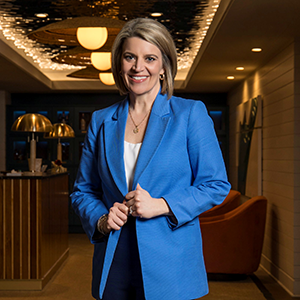
Katie was the obvious choice to lead the important discussion about Mental Health at our 2025 PRSA East Central District Conference. We strive to help PR professionals be the best versions of themselves through a commitment to self-care, and Katie is the best advocate we know.
Katie Neal, ACC, is a certified executive coach, award-winning communicator, sought-after workshop facilitator and keynote speaker. She is a frequent contributor to Strategies & Tactics, often writing about topics at the intersection of leadership, workplace culture, and mental health.
Katie seamlessly transitions from speaking as an educator and expert to delivering testimonials from lived experience. This skillful balance makes her a relatable and strong voice for mental wellness.
1) Why are you such an advocate for mental health awareness? What got you so interested in this issue?
As someone who has experienced repeated bouts of burnout over the course of my career, I’m deeply passionate about mental health. For a long time, I operated in high-performance environments where pushing through exhaustion was normalized and even rewarded. From the outside, everything looked successful. On the inside, it was a different story.
What I’ve come to understand, both personally and professionally, is that burnout isn’t a sign of weakness. It’s often the result of sustained overperformance without the systems, boundaries, or support to make it sustainable. Today, that lived experience informs the work I do with leaders and teams, helping them perform at a high level without paying for it with their well-being.
2) Your audiences seem to relate to you because of how you blend education and expertise with lived experience and self-discovery. Talk about how you have looked inward for discovering ways to help others address issues of mental health.
The truth is, I haven’t always been this self-aware or this self-trusting. I still think back to a moment about 10 years ago when a mentor (who was also a licensed counselor) introduced me to the concept of the perfectionistic mindset. It was a real eye-opener.
Until then, I wore my perfectionism like a badge of honor. I didn’t recognize how much that fear-based mentality was driving my decisions, holding me back, and at times impacting those around me.
But it wasn’t until I stepped away from full-time communications work that I saw just how common these challenges are — burnout, anxiety, imposter syndrome — especially in high-performing fields like PR.
I’ve always processed my own experiences by building community with others in similar situations. That instinct now shows up in my work as a coach, facilitator and speaker — creating spaces where people can be honest about what’s really going on and then equipping them with practical tools to move forward with more clarity and confidence.
3) We may be making progress on raising awareness about mental health, but we seem to be in a race to counter all the new challenges we face in our professional and personal lives. In your view, what are the emerging threats to peace of mind? Is AI a threat not only to our job security, but also to our sense of purpose? Are PR pros finding the right balance of in-person vs. remote work?
This is an interesting observation. We’re absolutely seeing progress in awareness, but the landscape is getting more complex just as quickly.
There are a few emerging pressures I’m seeing consistently:
● AI and shifting job expectations — Not just concerns about job security, but deeper questions about identity and purpose. When the nature of our work changes, it can shake how we see our value. I’m still firmly in the camp that we need human experiences and strategy, but there’s no question that AI and the imperative to use AI are pressure-testing our profession.
● Blurring of boundaries in hybrid and remote work — Flexibility has benefits, but it can also create an “always on” culture that’s hard to step away from. And for those of us who work remotely exclusively, it’s easy to disengage and skip some of the social norms where community is built, like team lunches, happy hours, and in-office activities.
● A widening generational divide — Different expectations around work, communication, and connection can create tension and disengagement if not thoughtfully managed.
None of these are inherently negative, but without intentional leadership and communication, they can quietly erode people’s sense of stability and well-being.
4) What do you find is causing the most anxiety to PR pros these days?
Right now, I’d describe it as a one-two punch of anxiety. The rapid rise of AI, combined with a contracting job market, is creating real uncertainty. Many of the communications professionals I coach — especially those impacted by layoffs or restructuring — are finding that it’s taking longer to land their next role. And for more senior leaders, the challenge can be even greater, given fewer roles at that level.
At the same time, shrinking budgets and the misconception that AI can replace strategic communication are adding pressure to already stretched teams.
The result is a perfect storm: uncertainty, increased workload, and a feeling of needing to constantly prove your value. For some, a loss of identity can follow.
What helps is shifting from a reactive to a proactive mindset, which includes getting clear on your unique value, strengthening how you communicate that value, and building the relationships that open doors before you need them. That’s where I see people regain a sense of control and confidence, even in a challenging market.
5) We may be making progress on mental health awareness… but what about self-awareness? How often do you find that clients you talk to about their mental health are in denial?
In my experience, most people can recognize when they’re feeling burned out, stressed, or anxious. Perfectionism is the more subtle — and often misunderstood — factor.
Because the word “perfectionism” can sound positive, it’s easy to overlook. But in reality, it often shows up as unrealistically high standards, intense self-criticism, and a fear of failure or judgment.
For example, I didn’t always recognize that my own procrastination wasn’t actually about my belief that I performed best under tight deadlines. In reality, I put things off that I was (often subconsciously) afraid to do or had never done before.
That level of awareness is often the turning point. When people begin to understand why they’re operating the way they are, they can start to make more intentional choices instead of defaulting to old patterns.
Additional links that might be helpful:
Website: https://www.katienealconsulting.com/
TEDx Talk: The Perfectionism Trap: The Hidden Cost of Getting It All Right
S&T April 2026: Bouncing Back from a Layoff
S&T May 2025: Crisis of Well-being: Why PR Pros Need Support
S&T Nov.-Dec. 2025: From Burnout to Breakthrough
Mark Pompilio
ECD Chair